Safari in Africa 2026: Best Destinations & Costs
Experience wild Africa
A safari in Africa is, for many travellers, the definition of a dream trip. The continent offers a rare combination of untouched nature, extraordinary wildlife and cultures that reach far back in time. Whether you are hunting for "The Big Five" or want to stand on the endless plains of the Serengeti, a safari brings you closer to nature than almost anywhere else on earth.
Planning a trip like this takes some insight into geography, seasons and logistics. Africa is enormous, and the experience changes drastically depending on whether you are in the dry landscapes of Namibia, the waterways of Botswana, or the lush savannahs of Kenya and Tanzania.
Where should you go? The best destinations for a safari in Africa
Choosing the country is the first big step. These are the destinations that consistently deliver first-class safari experiences — and you can compare flight prices to each of them here before you commit.
Tanzania and Kenya
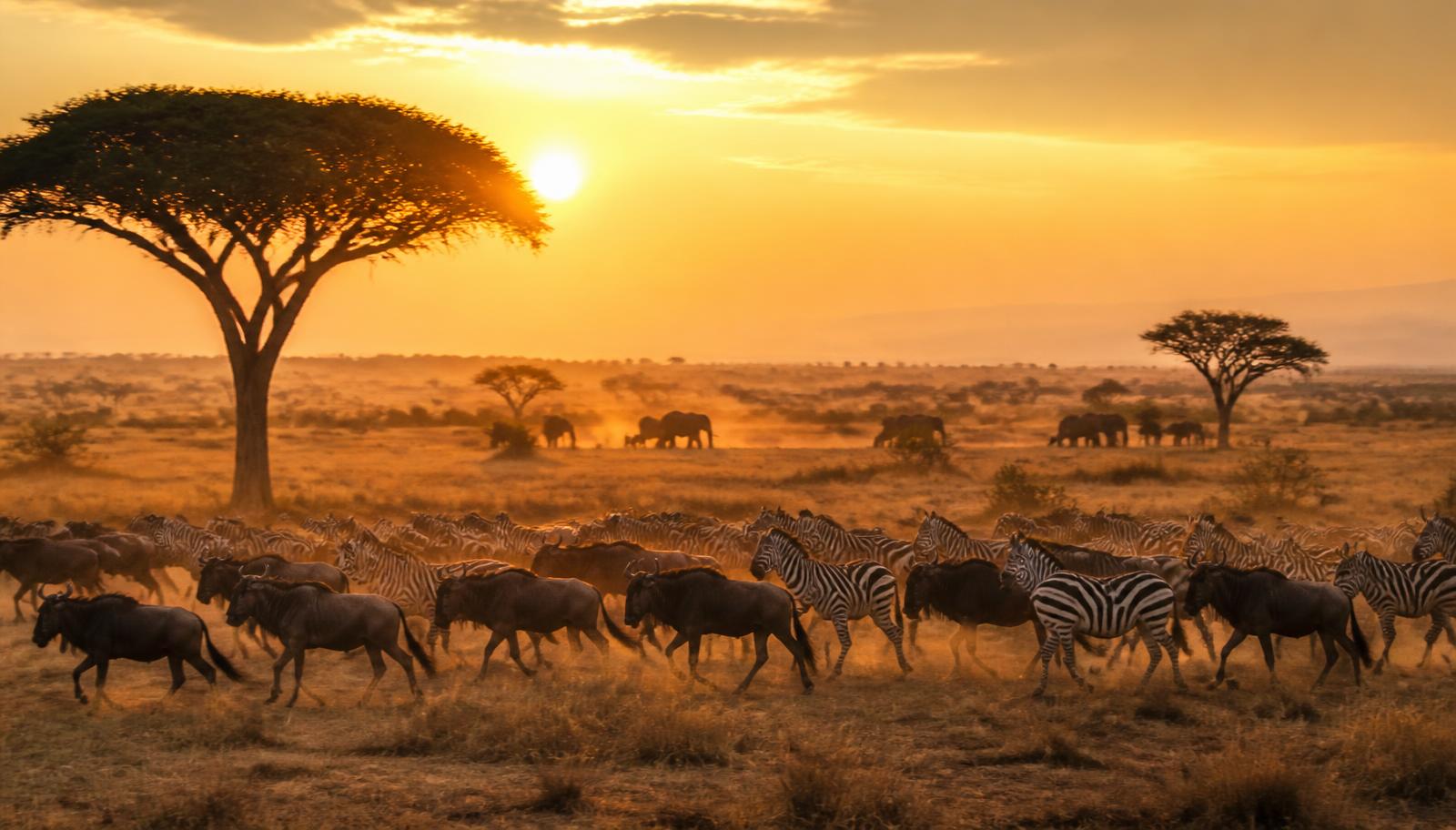
These two East African countries are often called the cradle of the safari. This is where you find Serengeti National Park and the Maasai Mara — the best odds anywhere of seeing enormous herds of wildebeest and zebra, along with the big cats that follow them.
South Africa
Kruger National Park is one of the most accessible destinations for a safari in Africa. The infrastructure is excellent, which makes both guided tours and self-drive safaris realistic. South Africa also combines easily with city life in Cape Town or wine tasting in Stellenbosch.
Botswana
For a wilder, more exclusive experience, Botswana is outstanding. The Okavango Delta is a unique ecosystem you can explore from a traditional mokoro (canoe). Low-volume tourism is the rule here, which buys you a genuine sense of isolation and luxury.
East Africa vs Southern Africa: differences and advantages
Understanding the regional differences before you book saves both money and disappointment.
| Feature | East Africa (Kenya/Tanzania) | Southern Africa (South Africa/Namibia/Botswana) | | :--- | :--- | :--- | | Landscape | Open savannah and endless plains | Everything from desert to dense bush and river deltas | | Wildlife | Massive herds (the Migration) | High Big Five density in private reserves | | Accommodation | Often large tented camps and lodges | Simple campsites to ultra-luxury lodges | | Transport | 4x4 vehicles with pop-up roofs | Open safari vehicles are standard | | Malaria risk | High in most areas | Varies — malaria-free zones exist in South Africa |
When is the best time for a safari in Africa?
Timing is everything for game viewing. The dry season is generally best: as water sources dry up, animals gather at the remaining waterholes and thinner vegetation makes them far easier to spot.
- June to October: Dry season across most of East and Southern Africa. This is also when the Great Migration typically crosses the Mara River.
- November to May: The green season. The landscape is lush and beautiful, birding is at its best, and many animals give birth — but predators are harder to see in tall grass.
Flights follow the same rhythm: dry-season departures are the most expensive weeks of the year. Booking roughly 3–6 months out for June–October travel usually beats booking late, and the same booking-window logic we tested on long-haul routes applies here.
The Great Migration: a natural wonder
Nothing compares to the sight of more than a million wildebeest and hundreds of thousands of zebra moving in an endless circle between the Serengeti in Tanzania and the Maasai Mara in Kenya. It is the single most sought-after experience on a safari in Africa.
The migration is driven by rain and fresh grazing. The movements are natural and can never be guaranteed on a specific date, but they follow a fairly predictable annual pattern. Watching the herds cross crocodile-filled rivers is the dramatic high point for most travellers.
Types of safari: from luxury lodges to camping
A safari can be shaped around almost any budget:
- Mobile camping safaris: You sleep in tents that move as the journey progresses — the most authentic way to feel part of the bush.
- Luxury lodges: Pools, gourmet food and suites looking straight out over the savannah.
- Walking safari: Exploring on foot with an experienced guide teaches you tracks, plants and the smaller animals you never notice from a vehicle.
- Fly-in safari: Light aircraft between parks save days of driving and give you the landscape from above.
Practical tips: packing list and health
To make your safari in Africa as successful as possible, preparation matters.
Clothing and equipment
- Neutral colours: Khaki, beige or green. Avoid bright colours and white, which can spook animals — and avoid dark blue and black, which attract tsetse flies in some areas.
- Layers: Mornings and evenings get genuinely cold, even in Africa. Bring a good fleece or windproof jacket.
- Binoculars: Indispensable for detail at distance.
Health and safety
- Vaccinations: Check with your local travel clinic well ahead of departure. Yellow fever vaccination is required for entry to certain countries.
- Malaria prophylaxis: Many safari areas are malaria zones. Talk to a doctor about preventive medication.
- Water: Drink bottled or purified water only.
How to book a safari trip without overpaying
Most of the total cost of a safari sits in two places: the lodge or camp, and the long-haul flight to get there. The lodge price is usually fixed by the operator — the flight is where you have real leverage.
- Compare more than one source for the flight. Fares to Nairobi (NBO), Kilimanjaro (JRO), Johannesburg (JNB) and Cape Town (CPT) can differ by hundreds of euros between search engines on the same day.
- Check the all-in checkout price, not the headline price. Long-haul fares are where hidden fees do the most damage.
- Be flexible on the arrival airport. Flying into Nairobi and connecting to the Mara can beat a direct fare into Kilimanjaro, and vice versa.
- Book internal light-aircraft transfers early — those seats are limited and sell out long before the international flights do.
Compare flights to Africa on Voyara →
Summing up your safari trip
A safari in Africa is more than a holiday; it is a lesson in nature's own rhythm. Whether you choose the open plains of Tanzania or the hidden waterways of Botswana, meeting wildlife on its own terms leaves memories for life. Plan around the seasons, pick the safari style that suits you, and the adventure takes care of itself. Respect nature, follow your guide's instructions, and be ready to fall for the African continent.
Related: Best European city breaks 2026 · Browse popular destinations
Read also: the best winter sun destinations, our travel insurance guide and how to find cheap flights in 2026.